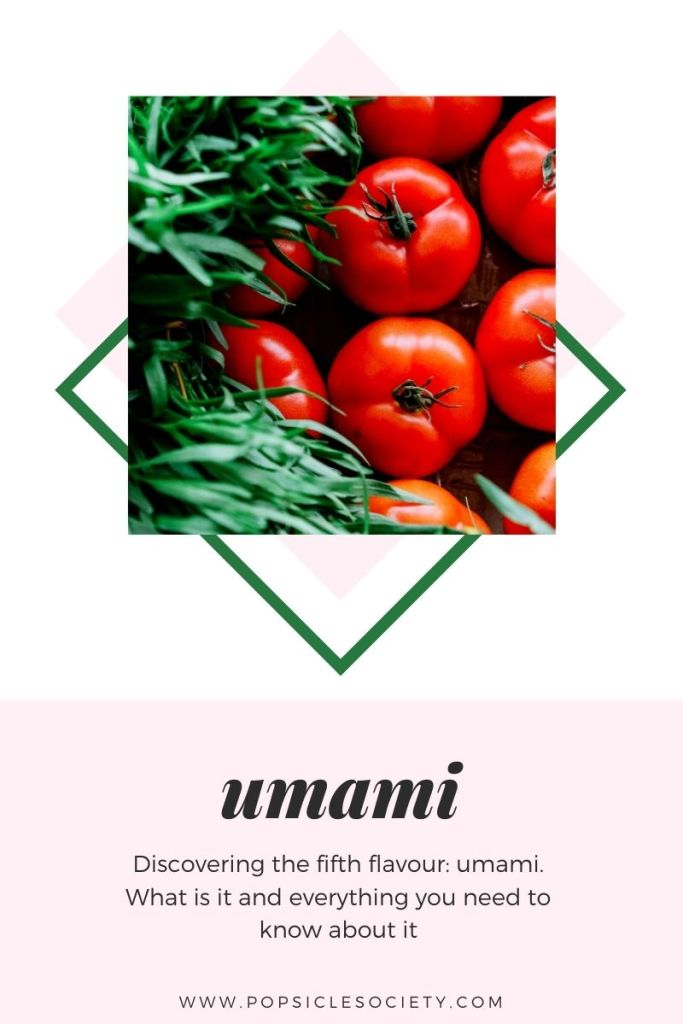
Discovering the fifth flavour: umami – what is it and everything you need to know about it

They call it the fifth or sixth flavour and it was discovered at the beginning of the last century in Japan. Nowadays it is synonymous with “good” and “tasty” but it could also play a beneficial role for our health. Let’s find out what umami is, what foods contain it and everything you need to know about it.

Discovering umami

I’m sure you’ve heard lots of time that a food has umami flavour but what is it? What do a mushroom soup with lots of grated Parmesan cheese and a plate of oriental sautéed noodles have in common? The umami flavour. A taste that until some time ago seemed to be the prerogative of Japanese or Chinese cuisine but which instead turned out to also belong to the Mediterranean tradition and its most famous ingredients. The umami-flavoured foods we use every day are many and, in addition to making the dishes tasty and tempting, they help us to stay healthy, according to researchers from Tōhoku University in Japan.
But let’s see what does umami mean

Defining umami is not easy. One could simply say that umami is a “good” flavour that makes you want to take another bite of the food that contains it. It is an additional flavour to sweet, salty, bitter, sour (hence the definition of “fifth flavour”) and fat (if this is also considered, umami becomes the “sixth flavour”). Historically, umami is the last to be discovered and recognised. The identification of umami took place in 1908 by the Japanese chemist Kikunae Ikeda and only in 2003 were discovered the receptors present in our mouth capable of decoding it.

Returning to what umami means, the Umami Information Center gives us this definition: “savory and pleasant taste that comes from glutamate and various ribonucleotides, including inosinate and guanylate, which found naturally in meat, fish, vegetables and dairy products.” 

Well, I don’t know for you, but for me this definition is a little bit too complicated. So let’s find out, in simple terms, what umami is.

Never miss a post:

What is umami?

The answer to this question is linked to a second question, namely: how is umami recognised? None of us wonder what sour taste is precisely because it is easy to recognise: just bite into a lemon to find out. Umami is an important flavour that often determines the success or failure of a dish but it is not easy to identify. Professor Ikeda isolated the chemical compound responsible for the umami flavour: sodium glutamate. This molecule helps to recognise umami: where there are high concentrations of sodium glutamate there is the umami flavour.

What are umami-flavoured foods?

Now that we know what umami is, finally we can practice cooking by tasting the foods that contain more sodium glutamate and therefore are more umami. For a complete overview you can refer to the Umami Information Center website which lists the most umami foods in the world divided by category. Within this database stand out cooked cow meat, ham, seafood, fermented fish products, aged cheeses such as Parmesan, seaweed, mushrooms, many vegetables such as tomato, carrot and asparagus, and nuts: peanuts, cashews and hazelnuts. These foods have in common the flavour and a “yummy deliciousness” that makes them tasty even unseasoned.

Curiosity!

It must be said, however, that the first experience with the umami flavour occurs, for many of us, well before the moment when you order a mixed platter at the restaurant. When? With the first breast milk feed. Indeed, perhaps even earlier because it seems that the umami flavour is present even in the amniotic fluid.

Why umami is good for our health?

The umami flavour has long been the victim of a prejudice that sees monosodium glutamate, used to flavour dishes, the protagonist of the “Chinese restaurant syndrome”. An alleged disease widespread in oriental restaurants guilty, according to the most conservative America of the 1960s-1970s, of using excessive quantities of monosodium glutamate.

Not only has the existence of the syndrome been scientifically disproved but, according to the evaluation of food additives by the FAO (Food and Drugs Organization) and WHO (World Health Organization), glutamate is not harmful and is not dangerous. But let’s not get confused: now we are referring to monosodium glutamate, a synthetic chemical product used as a powder additive and not to glutamate naturally present in foods. There is a certain difference between a hamburger and tomato sandwich and a packet of packed noodles: the second probably contains E620 and E625 (monosodium glutamate added as an additive and flavour enhancer), the first does not: it releases an umami flavour due to its exclusive merit of the raw material.

It seems that the substances that make an umami food are good for our health. This was discovered by a pool of scientists from Tōhoku University demonstrating that insensitivity to the umami flavour causes inappetence, reduced salivation, weight loss and, consequently, an overall deterioration in health especially in elderly or convalescent subjects.

Not only that, the merit of introducing traditional Japanese cuisine into the UNESCO intangible heritage goes precisely to umami: it is the umami flavour of the healthy but tasty ingredients of this cuisine that prevails over the excessive use of animal fats.

How to make umami recipes

First of all: choose naturally umami ingredients. But there are also condiments capable of adding flavour and richness to any dish. At the top of the list we find soy sauce and soy or rice miso, fermented foods of Asian origin. Then fish sauce, Worcester sauce and the Australian Marmite and Vegemite, from the Mediterranean cuisinea sprinkle of Parmesan cheese, triple tomato paste, chopped olives, capers and dried tomatoes.

Have you experienced umami flavour? Do you like it?

Popsicle Society
Popsicle Society

I love traveling, cooking and enjoying this beatiful world. 
I’m a life lover! Simple as that!

53 responses to “Discovering the fifth flavour: umami – what is it and everything you need to know about it”

  1. Halbarbera Avatar

    Stationed in Taegu, South Korea in 1969:

    The proper Korean translation for Umami is 감칠맛/Gamchil-mat. You will see this word across cooking books and many general description of foods.

    The word itself is a noun and there’s no -다 type of adjective, so it can’t be used like other regular tastes in writing. The original word Umami (“uma-taste”) in Japanese is also a noun.

    You would say something like: 감칠맛이 느껴진다 / I can taste the umami.

    Also, 고소하다 is not really same as 감칠맛, although it’s part of it. Nuts and seeds will be considered 고소하다, but won’t necessarily be umami-taste. Umami covers wider gamut of tastes while acting as an “enhancer”, that usually can’t be described in a single word.

    🥴…🤪…🍱

    Related Questions (More Answers Below)

    1. popsiclesociety Avatar

      Hahaha…thank you for the info 😊

  2. Halbarbera Avatar

    Hay! I don’t see anything below!

    1. popsiclesociety Avatar

      Anything below? 🤔

      1. Halbarbera Avatar

        🧐🤨😋

  3. mistermaxxx08 Avatar

    Always delicious and right on time,feeling that

    1. popsiclesociety Avatar

      Thank you very much!

  4. derrickjknight Avatar

    Fascinating enlightenment – a nice distinction re natural glutamate. As I don’t like fat, the fifth flavour will do me.

    1. popsiclesociety Avatar

      Thank you Derrick! Same here, no fat for me please 😉

  5. ourcrossings Avatar

    Such an interesting post. I know that soy sauce is also rich in umami components. Thanks for sharing and have a good day. Aiva 🙂

    1. popsiclesociety Avatar

      Yes, soy sauce and soy or rice miso are at the top of the list for umami flavour 😉 Thank you very much Aiva! Have a wonderful week ahead!

  6. robinpopham Avatar

    What a great post, thank you! I love these words that describe a sensation or broader description that doesn’t always translate perfectly.

    1. popsiclesociety Avatar

      Thank you very much! Yes, sometimes is difficult to express a flavour 😊

  7. Dr Namrata, Ph.D. Avatar

    I came across this word when I was teaching my 1st grader. An interesting post.

    1. popsiclesociety Avatar

      Thank you very much Namrata! Yes, I guess in the latest years we’ve heard more and more about umami flavour 😉

      1. Dr Namrata, Ph.D. Avatar

        You’re welcome. That’s true. We never read about it in school.

  8. Dorothy's New Vintage Kitchen Avatar

    Very interesting and informative post! Thank you!

    1. popsiclesociety Avatar

      Thank you Dorothy!

  9. Rupali Avatar

    An informative post.

    1. popsiclesociety Avatar

      Thank you Rupali!

  10. cedar51 Avatar

    I see it a lot in the competitive cooking TV shows and often the judges will raise the plate of food to their nose/sensory and then use their hand to kind of wave over the heat coming of the plate… Pretty soon they aren’t saying umami but more like flavour sense.
    I find that sometimes, inadvertently I will create meal, that I’ve often have – it may not look wonderful but something about it “begs me to have more” – and usually “not more isn’t available”. Next time I create similar meal, umami isn’t quite there, like before. Usually the meal is simple looking…

    1. popsiclesociety Avatar

      Yes, umami flavour is more common nowadays…basically a meal is not only taste, is smell and aspect too 😉 but a dish can be equally delicious even if it doesn’t look very pretty 😉

  11. Michelle Avatar

    I have never heard of this before so I’ve learned something new today!

    1. popsiclesociety Avatar

      Thank you Michelle! I’m very glad 😉

  12. Simon Avatar

    Have I ever? I first ask this to myself, as this is a new thing I have discovered, on a sunny Sunday. Umami! the word itself an alien, and reading the speciality, being the sixth discovered and the last discovered flavor, I must try it once. Fat, we needed fat, and so we needed Umami too, anything that is good, is good when it is taken the right portion. An interesting post Ribana✨👍 Loved it❤️

    1. popsiclesociety Avatar

      Thank you very much Simon for your kind words and for your time! You’re perfectly right! Everything is good if is taken in the right portion! We never have to exaggerate with anything 😉 I hope your weekend has been great! Wish you a wonderful and sunny week ☀️ 💕

      1. Simon Avatar

        ✨ Wish you a wonderful and Sunny Week Ahead you too Ribana..🤗 ❤️

  13. Hyman McHugh Avatar

    Very well-explained!

    1. popsiclesociety Avatar

      Thank you very much!

  14. aguycalledbloke Avatar

    Well there we go, a fifth flavour and there l was thinking umami was urban slang for mother 🙂

    Top notch post Ribana, we live and learn daily.

    1. popsiclesociety Avatar

      Haha…thank you very much always Rory! You’re perfectly right! We live and learn every single day 😉

  15. aguycalledbloke Avatar

    Hey Ribana, hope you are keeping well 🙂

    1. popsiclesociety Avatar

      Hi Rory, everything good thank you! I hope everything is going well on your side too 😉

      1. aguycalledbloke Avatar

        hey Ribana, it is as it ever was 🙂

        Glad you are still well lovely lady 🙂

  16. stevescountry Avatar

    Hi Ribana! Wow, this is a fantastic post! I have never heard of umami before so all this is totally new to me and what great information you gave us here! Thank you so much Ribana and I hope you have a wonderful Tuesday!😁😺😻🌞

    1. popsiclesociety Avatar

      Hi Steve, I’m glad you’ve found something new today 😉 Thank you for stopping by and I wish you and Muffin a wonderful evening 🤔😻

      1. stevescountry Avatar

        My pleasure Ribana and thanks so much!😁😸🌞

  17. indianeskitchen Avatar

    This was so interesting and you taught me a new word!

    1. popsiclesociety Avatar

      Thank you very much Diane!

  18. 100 Country Trek Avatar

    Umami is something I have never heard of…I am sure I had this when we were in Japan..loved the flavor of the food.

    1. popsiclesociety Avatar

      Thank you very much! Yes, Asian cuisine has a few ingredients that really give an additional touch to any dish 😉

  19. SaaniaSparkle 🧚🏻‍♀️ Avatar

    Thanks for sharing! 💕

    1. popsiclesociety Avatar

      Thanks for stopping by Saania!

  20. Squinty Chef Avatar
    Squinty Chef

    For me the most delicious foods, the things that I remember for ages after eating them, all have a combination that involves umami in some shapes or forms

    1. popsiclesociety Avatar

      Thank you very much for sharing! I’m glad you can enjoy and you like umami flavours 😉

  21. dunelight Avatar

    I did not realize how I crave umami. We eat a great deal of natural sourced ‘umami’. Huh.

    1. popsiclesociety Avatar

      That’s wonderful! Natural sourced foods and flavours are always the best 😉

  22. Americaoncoffee Avatar

    What a delicious looking plate!

    1. popsiclesociety Avatar

      Delicious indeed 😉

  23. Jessica E. Larsen Avatar

    Yep. My grandfather used get sick when serve with food containing chemical MSG (which is extremely used in Philippines) but he never have issues with tomatoes with also contain natural glutamate

    1. popsiclesociety Avatar

      I guess some of us have in their system a way to refuse all chemicals, which is good! Always better to go with natural ingredients!

  24. […] Discovering the fifth flavour: umami – what is it and everything you need to know about it […]

Leave a Reply to popsiclesocietyCancel reply

I’m Ribana

Welcome to my journey of food, travel and inspiration. I love traveling, cooking and enjoying this beautiful nature. I am a nutritionist, pastry chef, recipe developer, food writer, and ultimately a passionate home cook. I curate and develop recipes that are high on nutrition. I develop and test cost effective, nutritious meals using quality ingredients to help people improve their everyday eating experiences.

Let’s connect

My Motto

“Don’t be afraid to give up the good to go for the great.” – John D. Rockefeller

Interested in Growing your Business?

Sales and Marketing Books
Buy on Amazon

Categories

Discover more from Popsicle Society

Subscribe now to keep reading and get access to the full archive.

Continue reading