Hello my dear readers,
Did anyone say Monday?

Oh well, I guess it is Monday again and this means is time to discover another of our wonderful food. This week let’s discover the beetroot, a not very common but very interesting vegetable.
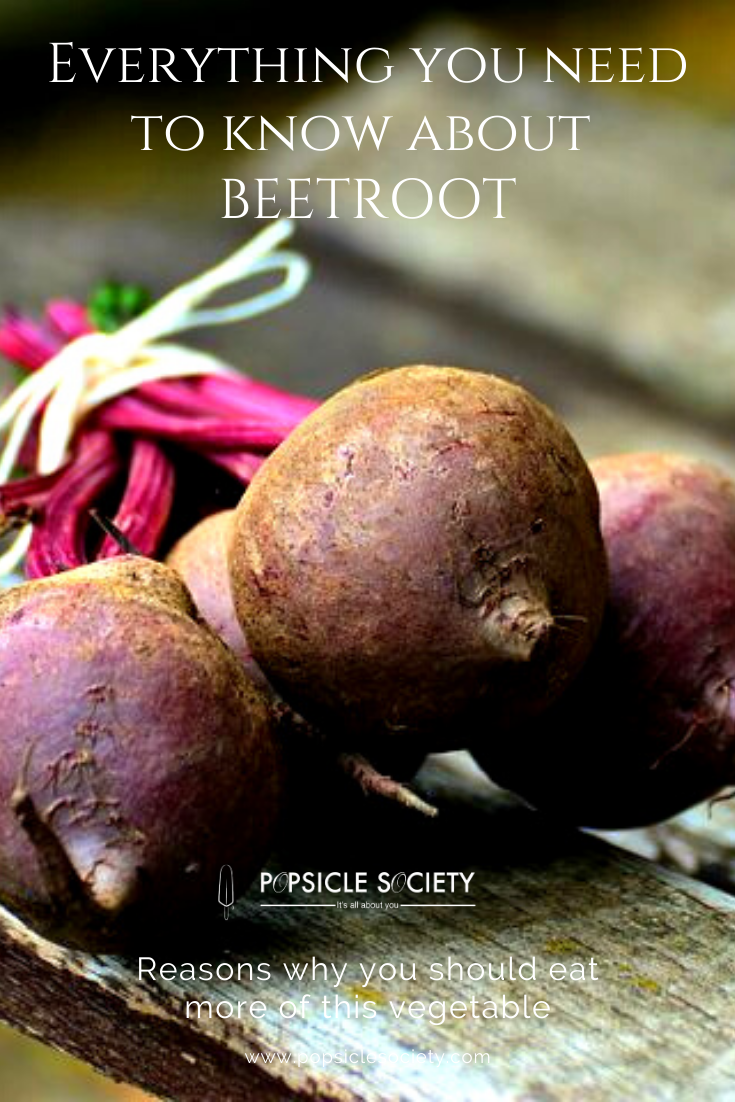

Originally from North Africa, beetroot was already present in the Greek world, as attested by some archaeological findings, with the name of beta. Theophrastus speaks of it with the name of τεῦτλον (tèutlon) and even the Romans knew it as Pliny the Elder and Columella testify. The Beta, in fact, was used not only as food, but also as a medicine.
Over time the beetroot began to expand through Spain and France, thanks to the cultivations in the monasteries and, only later, thanks to the farmers. Initially, only the leaves were consumed and only later did the root begin to be consumed, especially the root of the red beet, whose development is closely linked to the discovery of the sugar that can be extracted.

In the seventeenth century the French agronomist Olivier de Serres noted that cooked beetroot produces a juice similar to sugar syrup, but his statement was not followed.
Later, in 1747, Prussian chemist Andreas Sigismund Marggraf showed that the sweet-tasting crystals made from beetroot juice were the same as those obtained from sugar cane, but it was only one of his pupils, Franz Karl Achard, who began to produce commercially sugar, opening a first factory in 1801 in Cunern, in Lower Silesia at the time Prussian region, today in Poland.
At the beginning of the nineteenth century, however, cane sugar was still very widespread, but the Napoleonic wars, with the blocking of the importation of cane sugar in 1806, meant that experimentation with beetroot proceeded more quickly, until in 1811 some French scientists showed Napoleon sugar beet balls and the emperor ordered its cultivation on as many as 32,000 hectares of land.
Today, Europe grows 120 million tons of beet and produces 16 million tons of white sugar; France and Germany are the largest producers but, with the exception of Luxembourg, all EU countries extract sugar from beets in quantities that satisfy 90% of the internal needs.

Beetroot is part of the Chenopodiacee family, such as spinach and ribs, it is an undemanding crop: it does not require particular fertilization and can be satisfied with the residual fertility left by other crops.
Beetroot is cultivated in countries with a temperate climate. It is a biennial herbaceous plant, rarely perennial, with stems that can reach 1-2 meters in height. The leaves are heart-shaped, 5-20 cm long in wild plants often much larger in cultivated plants. The flowers are very small, 3-5 mm in diameter, green or reddish in color, with five petals; they are collected in dense spikes and have anemophilous pollination.

In the northern regions it is sown in spring and harvested from the end of August. In the south it is instead cultivated in the autumn-spring cycle, with harvesting in summer.
It likes a medium-textured soil, neutral or just basic, and well-drained, but it is one of the agrarian species that is best suited to clay soils, provided they are well drained.

Beetroot owes its typical color to betaine, a water-soluble pigment.
A natural dye used in the food industry to produce other foods is made from beets, that can also be used for the production of cosmetics, such as natural lipsticks, and for dyeing fabrics according to traditional methods.
Beetroot juice stains the fingers, but to remove the color just rub lemon on your hands.
Beetroot juice or its pulp, once cooked, is used for the natural coloring of creams and sweets.
Beetroot can be eaten raw, grated or thinly sliced and simply seasoned with lemon juice, or boiled, baked or pan-fried.


It is an excellent ingredient to be used in the preparation of soups. In Eastern European countries and in Russia beets are the main ingredient in the preparation of borsch, a soup made from red beets originating from Ukraine and typical of the Slavic world.
Beetroot is excellent in salads and is an ideal side dish for any type of dish, but it is also tasty as a main dish.
Excellent for the synthesis of proteins in the metabolism and for a correct functioning of the nervous system, it also has antioxidant properties which eliminate the toxins present in our body and contribute to maintaining us in shape.
Its juice has remarkable properties. In fact, it has been shown that it allows the human body to increase physical strength and the ability to breathe under stress.
This vegetable has a very low caloric intake: 100 grams of red beetroot contain only 20 Kcal.

The part of the beetroot that is eaten is the root, which boasts numerous properties and benefits that are worth mentioning. As we have already seen, this food has a very low caloric intake so it is often also indicated in slimming diets but the beneficial effects it can guarantee are really interesting.
The anticancer properties of beetroots have been described in several studies conducted over the years. It seems that this root is able to slow the growth and development of cancer cells and in particular it would have benefits in case of colon, breast and prostate cancer. Research continues, but the positive results of some studies make us think about the actual anticancer properties of beetroots.
This root contains saponins, which are able to facilitate the elimination of fat by the body. For this reason it is believed that beetroot has interesting purifying and slimming properties.
Beetroot is also good for the cardiovascular system: it contains folic acid, which in synergy with betaine is able to strengthen capillaries.
Red beets contain several useful substances to counteract depression such as betaine and tryptophan. The latter stimulates the production of serotonin, the famous happiness hormone.
Beetroot has numerous beneficial properties but also some contraindications: it is in fact rich in sugars and should therefore be consumed carefully by those suffering from diabetes.

Do you eat beetroots? I’m a very big fan and I eat them pretty often.
Thank you all for reading.
Join me next time and let’s discover Munich, Germany.
And if you would like to discover more about our food, you may enjoy my previous posts
Bye bye for now 🙂

Photo credit Pixabay & Google Images edited by Popsicle Society



Leave a Reply to popsiclesocietyCancel reply